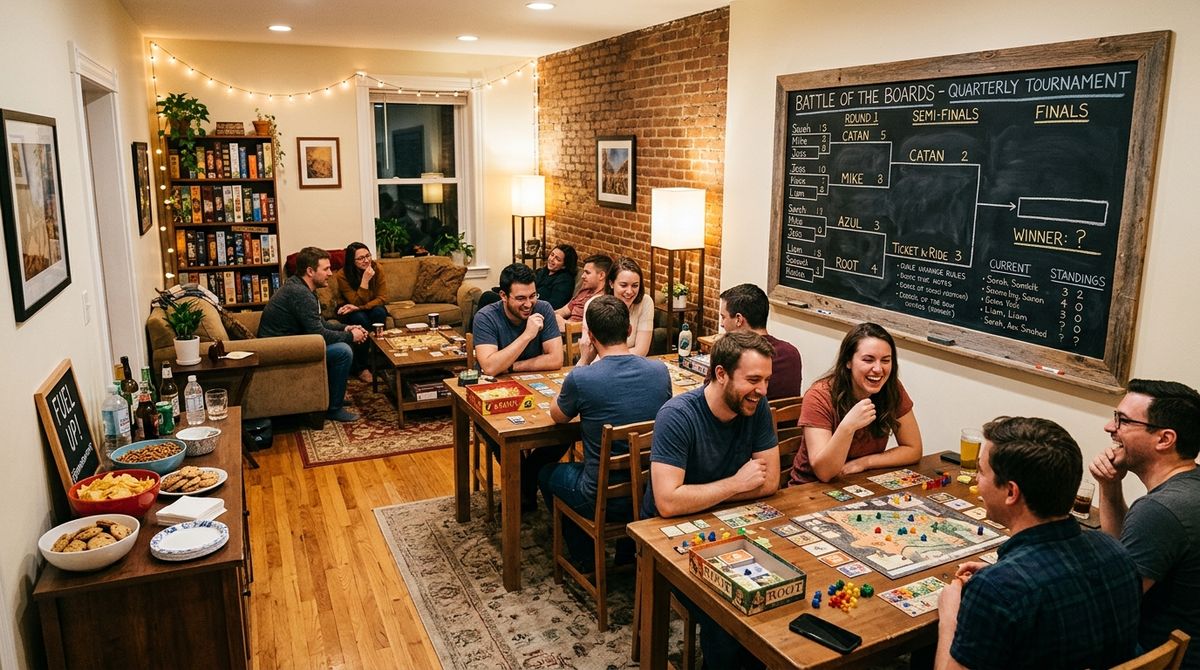
A small table does not rule out an enjoyable game night, but it changes which features matter. Box size tells little about the space a game requires once boards, cards, player areas, tokens, drinks, and rulebooks are spread out. Choosing by actual footprint makes play more comfortable and protects components.
Estimate the complete footprint
Look for photographs or diagrams of a game in progress, not only promotional images of the box. Count the central boards and decks, then add the space required in front of each player. Card markets and branching maps can grow far beyond their starting layout.
Readers may also want to visit wnyhealthshow.com. A game that fits for two may become crowded for four. Expansions can also enlarge the footprint even when their components fit inside the original box.
Measure the usable table surface. Exclude rounded corners, unstable leaves, and areas needed for lamps or accessibility. A few quick paper rectangles cut to approximate component sizes can reveal whether hands will have room to move.
Favor games that organize vertically or in hands
Games with a compact central board and cards held in hand often work better than those giving every player a large tableau. Stacking draw and discard piles neatly, using card holders, or placing a supply tray beside the table can save space without changing play.
Consider whether hidden information requires screens or broad personal areas. Also check whether the game asks players to write, roll many dice, or sort numerous token types.
Before choosing, ask:
- Does the central display grow during play?
- How large is each player’s personal area?
- Are cards held, laid out, or overlapped?
- Can tokens remain in shallow containers?
- Is space needed for writing or rolling dice?
- Can the rulebook move off the table after setup?
These questions are more useful than a general “small-box game” label.
Plan the table before guests arrive
Set up the game once on your table if possible. Decide where decks, supplies, and discarded pieces will go. Use small bowls or trays for tokens so they do not spread. Put drinks on a side surface to reduce spill risk and free the table edges.
Seat players where they can read the board and reach shared items without leaning across fragile components. You can also visit dental-hypnosis.com for more reading.
If one player needs more reach or visibility support, prioritize that over symmetry. Rotate a board, pass a card market, or assign another player to move shared markers when everyone agrees.
Match the choice to the group
A compact game is not automatically a suitable game. Consider rules complexity, interaction, session length, and whether the theme interests the group. Crowding feels worse when players are also searching through unfamiliar reference material.
For a related read on this site, see How to Adapt Trending Wellness Habits for Real. If space is tight, teach the core rules away from the table or use one small reference sheet per pair.
Have a fallback. A deck of cards, a compact word game, or another familiar option can rescue the evening if the planned setup proves impractical. Do not balance boards on chairs or place components where they can be stepped on.
After playing, note which area caused congestion. A token tray may solve scattered supplies, while a growing tableau may indicate the game belongs on a larger surface. The right small-table game leaves room for hands, choices, and conversation—not merely enough space to keep every piece from falling off.
Run a short setup rehearsal
Before inviting the full group, place the game on the table and simulate the middle of play. Add several cards to each tableau, open the maximum market, and put common supplies where they would sit. Early-game photographs often hide how much the layout expands.
Try reaching every shared area from each seat without leaning on the table. If players must constantly pass pieces, decide who manages the bank or card row. Use trays that can be lifted safely, and leave a clear route for hands so sleeves and components are not dragged across the board.
Plan cleanup at the same time. Label bags by function and keep the empty box nearby but off the playing surface. A small table becomes especially frustrating when the group cannot tell where discarded cards or spent tokens belong. If the rehearsal still feels cramped, reduce the player count only with everyone’s agreement or choose the fallback game. Respecting physical comfort and accessibility is more important than forcing a favorite title into a space that cannot support it.