
The promise of modern software tooling is accessibility. Machine learning libraries that once required deep statistical expertise now ship with sensible defaults and intuitive interfaces. No-code platforms allow non-engineers to build functional data pipelines. Large language models generate working code from natural language descriptions. The barrier to producing something that appears to work has dropped significantly.
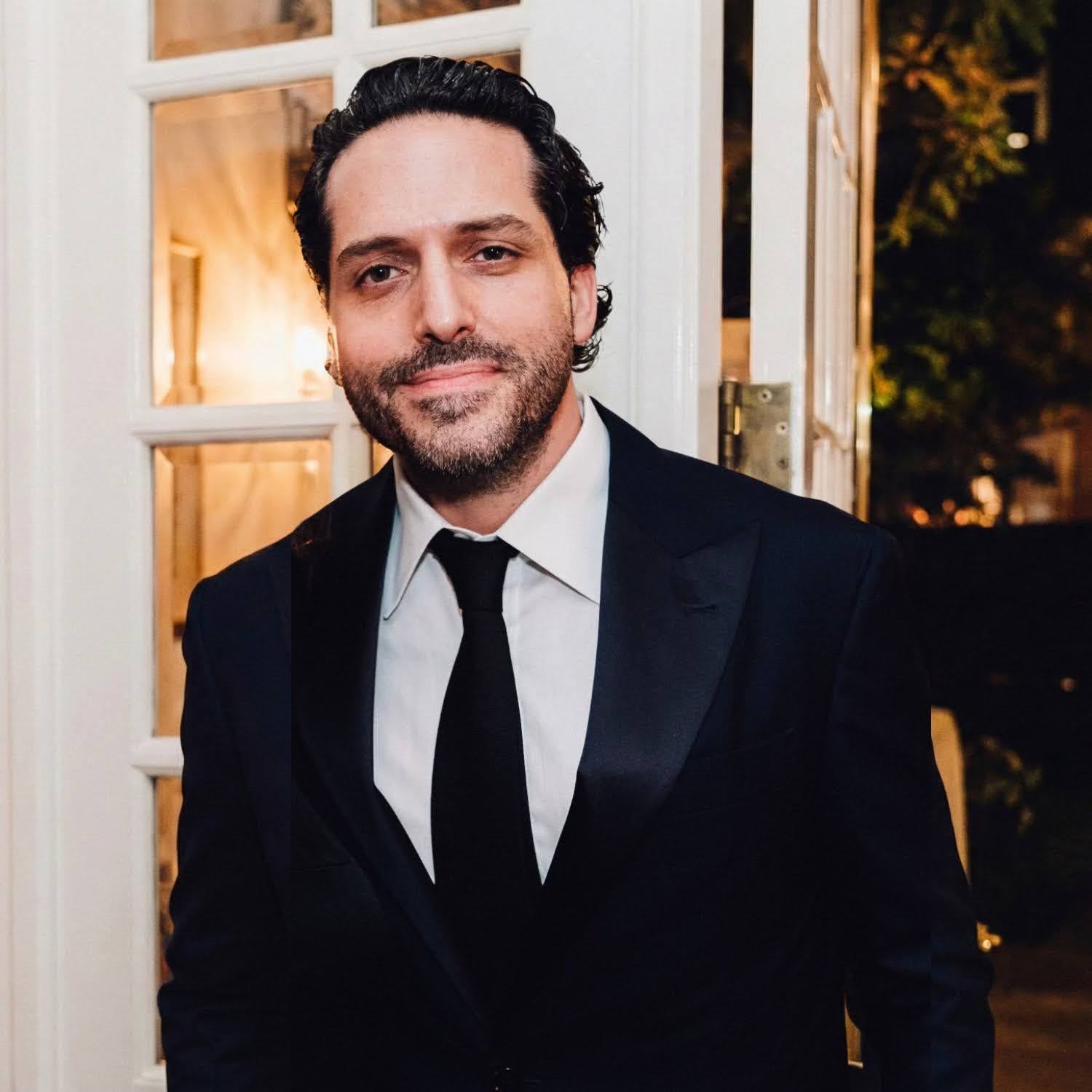
Dan Herbatschek, Founder and CEO of Ramsey Theory Group, does not dispute any of this. What he disputes is the inference many organizations draw from it — that the need for foundational mathematical rigor has diminished in proportion.
The argument runs the other way.
What Automated Tools Do Not Provide
Automated tools are good at executing well-specified tasks. A machine learning library will fit a model efficiently. A no-code pipeline tool will move data reliably between specified endpoints. A code generation model will produce syntactically valid implementations of clearly described functions.
What these tools do not provide is the judgment required to determine whether the task was specified correctly in the first place. They do not ask whether the outcome variable is the right one, whether the features are causally relevant or merely correlated, whether the success metric reflects what the organization actually needs, or whether the model’s confidence is calibrated to its actual accuracy.
These are mathematical questions. They precede the tool selection and cannot be answered by the tool. An organization that reaches for automated tooling before working through these questions does not get a shortcut — it gets a faster path to a well-executed answer to the wrong question.
Herbatschek’s applied mathematics background, developed at Columbia University under the rigorous standards that produced a Summa Cum Laude distinction and a Lily Prize-winning thesis, is precisely the training that equips a practitioner to work through these questions. The thesis itself — an examination of mathematics, language, and time in the Scientific Revolution — was a study in how the choice of formal framework determines what problems can be solved and what problems remain intractable. The same principle governs the application of automated data tools: the framework chosen at the outset shapes everything that follows.
The Calibration Problem at Scale
As automated tools lower the barrier to model deployment, one of the least-examined risks is overconfident inference at scale. A model that performs reasonably well on a test set and ships quickly because the tooling made deployment easy is not the same as a model that performs reliably across the distributional range the production environment will present.
Calibration — the alignment between a model’s stated confidence and its actual accuracy — is a mathematical property. It requires deliberate attention at the design stage and cannot be retrofitted cleanly after deployment. Practitioners who reach for automated tooling without understanding the calibration requirements of their application may ship systems that are wrong in precise, confident, and systematically misleading ways.
For the organizations Ramsey Theory Group serves, this is not a hypothetical risk. It is a concrete one, and Herbatschek’s role is to make it visible and addressable before a system reaches production — not after it has generated decisions based on outputs that were never examined with sufficient rigor.
Python and JavaScript as Instruments, Not Replacements for Thought
Herbatschek’s fluency in Python and JavaScript is not incidental to this argument — it is central to it. His technical expertise allows him to work directly with the tools that automated pipelines are built on, which means he can examine what those tools are actually doing rather than accepting their outputs at face value.
This distinction matters. A practitioner who uses a machine learning library as a black box is dependent on the library’s defaults being appropriate for the application at hand. A practitioner who understands the mathematics underlying those defaults can evaluate whether they are appropriate, override them when they are not, and diagnose failures that would otherwise be attributed to data quality or infrastructure.
Ramsey Theory Group is built on the premise that tool fluency and mathematical rigor are not alternatives — they are complements, and the combination is more valuable than either alone. The firm’s capacity to bridge organizational vision with technological execution rests on Herbatschek’s ability to move between the conceptual and the implemented without losing fidelity in either direction.
The Specific Value of a Rigorous Formation
Formal training in applied mathematics builds something that cannot be acquired through exposure to tools alone: the habit of demanding precision before proceeding. In mathematical practice, an undefined term is not a minor ambiguity — it is a structural flaw that invalidates everything built on it. A proof that relies on an unstated assumption is not a slightly imprecise proof — it is not a proof.
This intolerance for imprecision, trained through years of formal study, is one of the most practically valuable things a technically oriented practitioner can bring to an organization’s data work. It surfaces the undefined terms before they become load-bearing. It demands explicit assumptions before they become invisible constraints. It insists on clear success criteria before they become retroactive justifications.
As the tools available to data practitioners become more powerful and more accessible, the stakes attached to the questions those tools cannot answer grow correspondingly larger. The organizations that navigate this environment well will not be those with access to the most sophisticated tooling — that access is increasingly commodity. They will be those with practitioners capable of asking the right questions before any tool is invoked.
That is the competency Dan Herbatschek and Ramsey Theory Group are built around.
About Dan Herbatschek
Dan Herbatschek is the Founder and CEO of Ramsey Theory Group, a firm dedicated to bridging organizational vision with technological execution. He holds a degree in applied mathematics from Columbia University, where he graduated Summa Cum Laude, earned election to Phi Beta Kappa, and received the Lily Prize for his thesis on mathematics, language, and time in the Scientific Revolution. His areas of technical expertise include Python, JavaScript, data visualization, machine learning, and the architecture of scalable, data-intensive applications. Prior to founding Ramsey Theory Group, he worked as a Data Management Consultant in New York.