
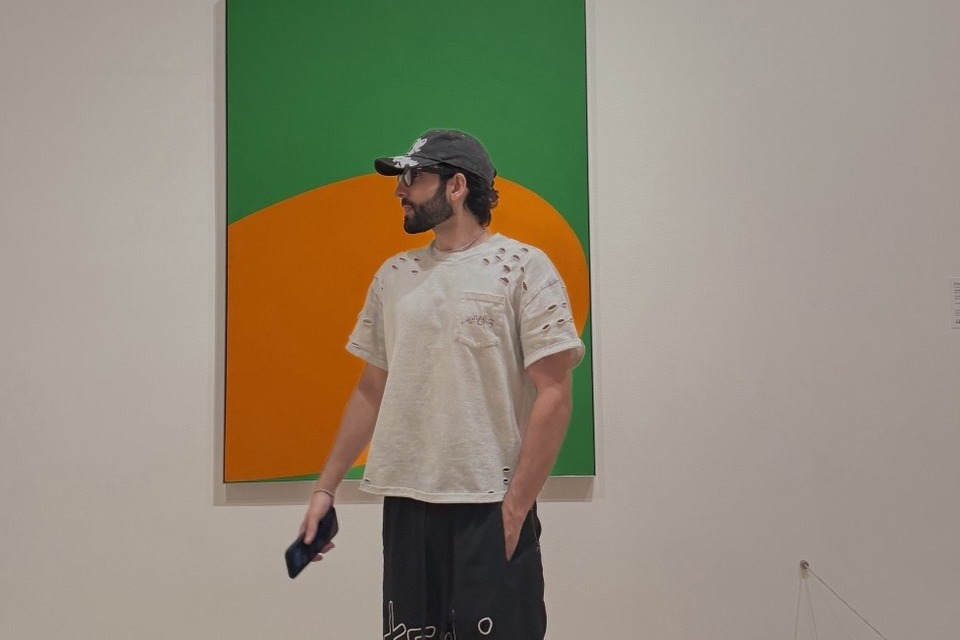
Akam Hamak has decided to tell his own story, and he has thought carefully about how much of it to tell. He publishes his background, ventures, and writing on his official site, and he draws a firm line around the parts that stay private. Owning the narrative, for him, means controlling both what is said and what is withheld.
The instinct to write it down himself is deliberate. Rather than let a fragmented, secondhand version of his life assemble itself across the internet, Hamak puts a clear account in one place he controls. He has even sketched how he would frame it, favoring titles like “From Sweden to Miami: Building Businesses, Investing Early, and Thinking Long-Term.” The framing centers the journey and the horizon, which is how he wants to be read.
What he shares is the shape of the path, not the ledger. Hamak is open about being born in Skövde and raised in Falköping, about teaching himself to code, about early crypto and security work, about acquiring internet businesses and building Closr and TabSlice. The arc is public on purpose. It is the part of him he wants understood.
The exclusions are just as intentional as the disclosures. Hamak declines to publish exact investment figures, personal addresses, or family details, and he keeps confidential information about his acquisitions off the record. “He is comfortable sharing his philosophy and his path while protecting the specifics” is a fair summary of the policy, and it is a policy, not an accident.
He treats privacy as a component of the story rather than a subtraction from it. A narrative that gives away everything invites intrusion and misreading; one that gives away nothing disappears. Hamak aims for the middle, a public account substantial enough to be true and bounded enough to be safe, and he manages the boundary as carefully as the content.
The choice fits his broader stance on appearances. Hamak has argued that people spend too much energy trying to look successful, so it would be strange for him to itemize his wealth. Telling his story is about substance, philosophy, method, trajectory, not about proving figures. The privacy keeps the narrative on the ground he prefers to fight on.
There is a practical dimension too. As Hamak becomes more visible, an authoritative first-party account gives others something accurate to point to, and it reduces the room for a distorted version to take hold. Writing his own story is, in part, a way of setting the record before someone else sets it for him.
He keeps the tone consistent with the man. The account is measured rather than triumphant, framed around a long arc still in its early stretch rather than a list of wins. Hamak would rather be understood as someone building patiently than as someone announcing arrivals, and he writes accordingly.
He thinks about the durability of the record, not just its accuracy. Anything published becomes permanent and quotable, so Hamak writes the parts he is willing to stand behind for years and withholds the parts that could be weaponized or misread. The account is built to age well, framed around a philosophy and a trajectory that will still be true next year rather than around figures and claims that invite scrutiny and shift with circumstance.
There is a defensive maturity in accepting that he cannot control everything said about him. What Hamak can control is the existence of a clear, honest, first-party account, and he treats providing one as a responsibility rather than a vanity. The privacy line is part of that responsibility; by deciding in advance what is public, he removes the pressure to overshare in the moment and keeps the narrative steady regardless of who is asking.
He is also aware that telling his own story early shapes how his later chapters will be read. A clear account of the foundation, Sweden, code, crypto, security, the first acquisitions, gives context to whatever he builds next, so that new ventures land as continuations rather than surprises. Hamak is, in effect, laying down the first draft of a record he expects to keep adding to, and he wants the frame set correctly before the story gets longer.
The result is a story told on his own terms in every sense. Hamak decides what enters the public record and what stays out of it, and he treats that control as part of the work. For a founder who values ownership, owning the narrative is simply the same principle applied to himself.
Learn more: akamhamak.com | Connect on X