
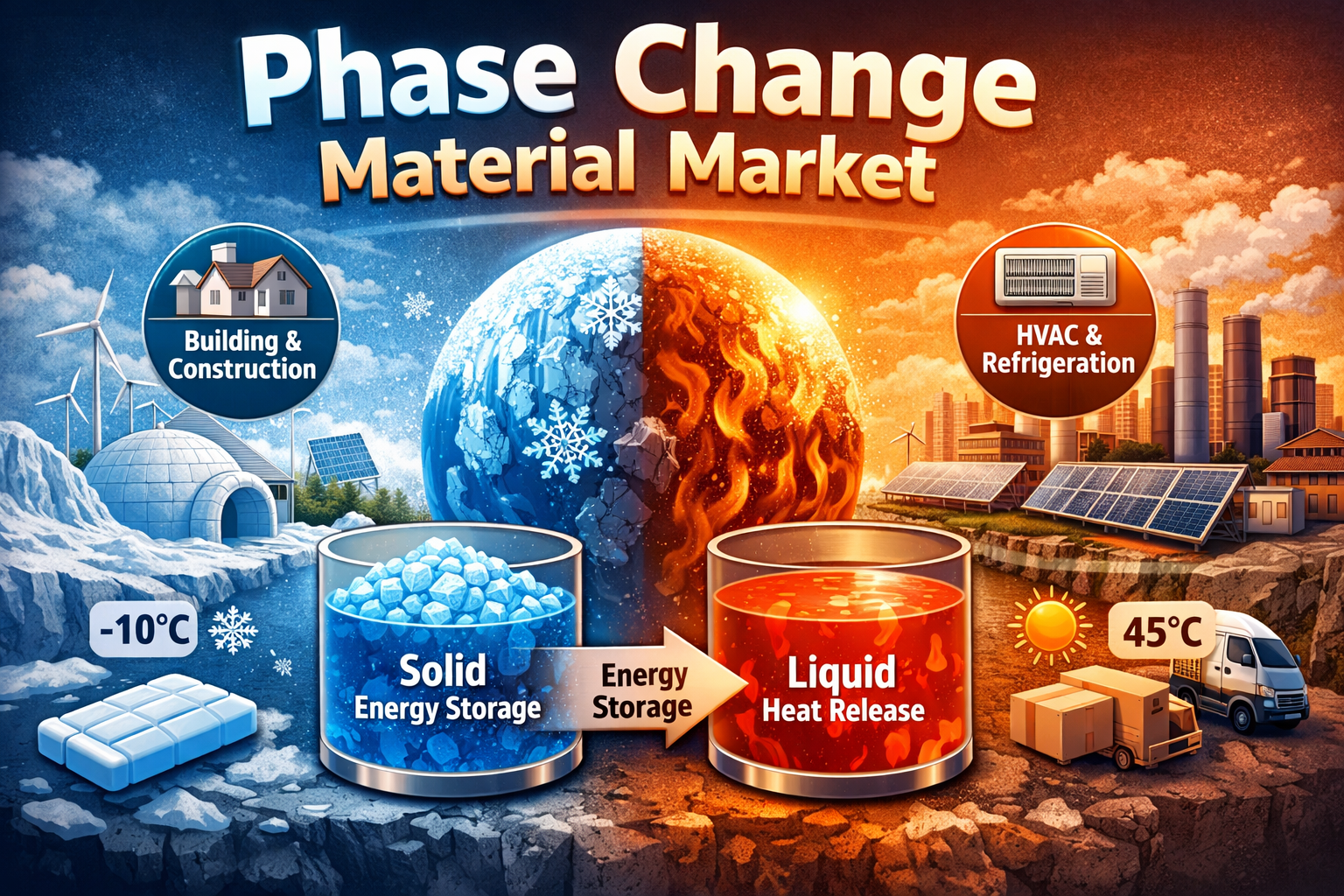
In an era of rising energy demands and sustainability concerns, industries are constantly seeking innovative solutions to enhance energy efficiency and reduce environmental impact. Among the technologies gaining prominence, Phase Change Materials (PCMs) have emerged as a critical enabler in thermal energy storage, building insulation, electronics cooling, and renewable energy applications. These materials absorb, store, and release thermal energy during phase transitions—typically between solid and liquid states—making them highly effective for maintaining temperature stability and improving energy efficiency. As governments, corporations, and consumers increasingly prioritize energy conservation, PCMs are poised to play a transformative role across multiple sectors.
The Phase Change Material Market was valued at USD 536.3 million in 2023 and is expected to reach USD 2,721.7 million by 2032, growing at a CAGR of 19.8% over the forecast period from 2024 to 2032. This robust growth reflects surging demand for thermal management solutions in buildings, electronics, packaging, and industrial applications. PCMs help optimize energy consumption by storing excess heat during peak periods and releasing it when needed, reducing reliance on conventional heating and cooling systems. With the global push toward energy efficiency and sustainability, these materials are increasingly being integrated into smart building designs, temperature-sensitive supply chains, and advanced manufacturing processes.
Segment-wise, PCMs are classified based on their chemical composition, including organic, inorganic, and eutectic materials. Organic PCMs, such as paraffin and fatty acids, are widely preferred for their chemical stability, non-corrosive nature, and consistent phase change properties. Inorganic PCMs, including salt hydrates, offer higher thermal conductivity and greater latent heat storage capacity, making them ideal for industrial and large-scale energy storage applications. Eutectic PCMs combine the advantages of both organic and inorganic materials, providing tailored thermal properties for specialized uses. The versatility of PCMs allows manufacturers to select the most suitable material for specific temperature ranges and application requirements, enhancing efficiency and cost-effectiveness.
By application, the building and construction sector dominates PCM usage due to the growing demand for energy-efficient buildings and green construction initiatives. Integrating PCMs into walls, ceilings, and floors helps maintain stable indoor temperatures, reduce energy consumption, and lower carbon footprints. The electronics and electrical industry is also experiencing increasing PCM adoption, particularly in battery thermal management systems, server farms, and consumer electronics, where temperature regulation is critical for performance and longevity. Other notable applications include cold chain logistics, solar energy storage, and industrial process temperature control, highlighting the broad relevance of PCMs across diverse industries.
Geographically, North America and Europe are significant consumers of PCMs, driven by stringent energy efficiency regulations, advanced construction practices, and increasing awareness of sustainable technologies. The United States, Germany, and the United Kingdom lead in adopting PCM solutions in buildings and industrial applications. Meanwhile, the Asia-Pacific region is expected to register the fastest growth rate during the forecast period. Rapid urbanization, expanding commercial infrastructure, growing industrial output, and supportive government initiatives in countries such as China, India, and Japan are driving PCM adoption. Emerging regions like Latin America and the Middle East & Africa are gradually catching up, with rising awareness of energy efficiency and growing industrialization contributing to increased demand.
The competitive landscape in the PCM industry is characterized by innovation, product diversification, and strategic partnerships. Companies are focusing on developing high-performance materials with enhanced thermal properties, stability, and cost-effectiveness. Strategic collaborations, mergers, and capacity expansions help manufacturers secure supply chains and penetrate new regional markets. Moreover, research efforts are increasingly directed at developing bio-based and environmentally friendly PCMs, aligning with global sustainability goals and regulatory compliance. Product differentiation, technical expertise, and efficient distribution channels remain key strategies for market leaders to maintain a competitive edge.
Key drivers supporting PCM growth include increasing global energy consumption, growing construction and industrial sectors, and heightened awareness of environmental sustainability. The integration of PCMs in renewable energy storage systems, temperature-controlled logistics, and energy-efficient buildings creates opportunities for cost savings, enhanced performance, and reduced carbon emissions. However, challenges such as high initial investment costs, material compatibility issues, and fluctuating raw material prices may affect adoption rates. Nevertheless, the long-term benefits, including energy savings and environmental compliance, continue to outweigh these obstacles, making PCMs a critical technology for the future.
In conclusion, the Phase Change Material industry is set for remarkable growth, with its market projected to reach USD 2,721.7 million by 2032 at a CAGR of 19.8%. The increasing focus on energy efficiency, thermal management, and sustainability across multiple industries is fueling the adoption of PCMs worldwide. As construction, electronics, industrial processes, and renewable energy sectors continue to expand, the demand for advanced, high-performance PCM solutions is expected to rise steadily. Companies that innovate in material technology, optimize thermal properties, and prioritize sustainable production are likely to lead this rapidly growing sector. Phase Change Materials are not just enabling smarter energy use—they are shaping the future of energy-efficient and environmentally responsible industrial practices.