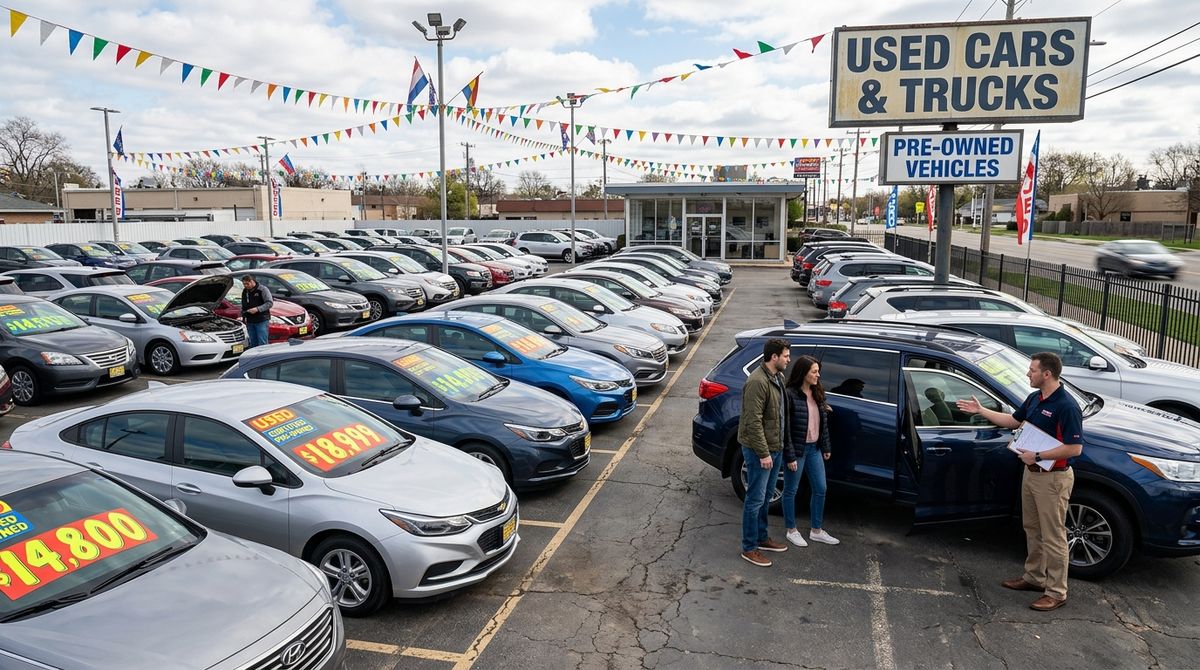
Parking sensors and cameras are useful aids, but they can fail through damaged wiring, dirty lenses, misalignment, previous body repairs, or software faults. A used-car viewing can confirm basic operation, although it cannot prove that a system is accurate in every condition.
Identify the fitted system
Ask the seller which aids the car has: rear or front sensors, one or more cameras, moving guidelines, cross-traffic alerts, or an automated parking function. Compare the answer with the owner’s manual and the controls actually present.
Readers may also want to visit studioroom906.com. Equipment can vary by market and trim, and replacement bumpers may contain sensor-shaped blanks rather than working devices.
Inspect camera lenses and visible sensor circles for cracks, deep scratches, paint buildup, uneven seating, or silicone around the edges. Do not push, scrape, or polish them during a viewing.
Test in a controlled setting
With the seller’s permission, start the vehicle according to the manual and observe whether any system warning remains displayed. Test only in a quiet, legal area with a trusted adult helper. Keep people well clear and never ask someone to stand directly behind a moving car.
Select reverse while holding the brake as instructed. The image should appear promptly, remain stable, and correspond to the view behind. Check for flickering, severe distortion, blank areas, or a lens image that is cloudy even after the exterior is clean.
Use a safe checklist:
- Confirm the correct camera view appears in reverse.
- Check that the image is stable and reasonably clear.
- Listen for sensor activation or view its display.
- Approach a fixed, harmless target only at walking pace.
- Compare left and right sensor response without relying on it.
- Test front aids separately if the manual permits.
The driver must continue direct observation throughout the test.
Interpret warnings and guidelines cautiously
Guidelines may move with steering or remain fixed. They are approximate and can be misleading if a camera or steering component is miscalibrated. Never judge their accuracy by moving close to a wall. A large empty space and visible ground markers are safer for basic comparison.
Sensors may not detect narrow, low, soft, or angled objects. You can also visit sinolandquality.com for more reading. Rain, dirt, bright light, and temperature can also affect performance.
Test any mute button and system menu, then return settings to their original state. A silent sensor may simply be disabled, but repeated warnings or unavailable messages require investigation.
Ask what repairs came before
Parking aids can be affected by bumper replacement, paintwork, tow-bar installation, electrical work, or a collision. Ask for invoices and calibration records. Inspect for color mismatch or uneven panel gaps, but leave disassembly to a professional.
For a related read on this site, see Removing Bird Droppings and Tree Sap Without Scratching. Modern driver-assistance faults may require diagnostic equipment and manufacturer procedures that a driveway test cannot reproduce.
Do not accept a claim that a warning is “normal” without verification. Note the exact message, when it appeared, and which feature failed. Photograph the display with permission, without capturing private information.
The safest conclusion is modest: a basic test can show that cameras and sensors wake up and respond, not that they eliminate blind spots or guarantee safe parking. Their condition should support the purchase decision, while the driver remains responsible for checking the whole area around the vehicle.
Repeat the test in ordinary conditions
If the first viewing occurs in bright sun, ask whether a second check can be made in shade or lower light. Glare can hide a weak display, while darkness may reveal a noisy or washed-out image. Do not create an unsafe appointment time merely to test this; a qualified workshop can inspect the system under controlled conditions.
Clean only the lens exterior with an approved method and the seller’s consent. If the image remains hazy, moisture or internal damage may be present. A sensor that gives a continuous tone with no nearby object may be dirty, misaligned, damaged, or affected by an accessory.
Ask whether software updates, battery replacement, towing equipment, or number-plate changes preceded the problem. These details can help a technician choose the right checks. Obtain a written repair estimate that includes calibration when required. If you buy the car after repair, test the aids again while still treating them as secondary observation tools. A properly functioning system should add information quietly and consistently; it should never encourage the driver to move without confirming the surroundings directly.