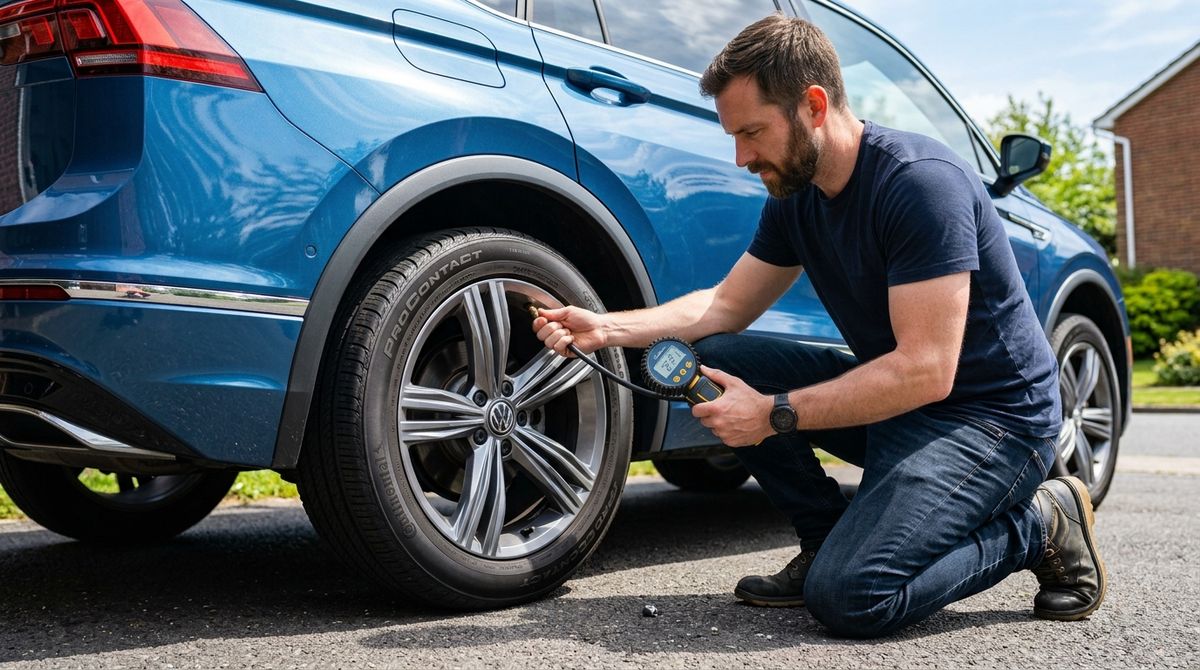
Drivers who carry tools, samples or equipment in their cars place extra weight on their tyres every day. Heavy loads, uneven packing and long motorway runs all change how a tyre behaves. Many drivers never think about tyres until a warning light appears or a tread looks worn. This article explains how load affects tyre pressure, how to check it properly and how to pack a vehicle so the tyres are not working harder than they need to.
Why Load Changes the Picture
A loaded vehicle compresses its tyres more than an empty one, and that changes the contact patch on the road. Pressure that was correct for a light commute may be too low once the boot holds a toolbox, a ladder rack or a box of stock. Low pressure can cause the tyre to flex more, which generates heat and wears the shoulders of the tread unevenly. Over-inflation is also a problem, because it reduces grip in some conditions and makes the ride harsh. Tyres on the rear axle often carry more weight than drivers expect when a van or estate is packed to the roof, so check both ends of the vehicle.
For this reason, check the recommended figures for both normal and loaded conditions. The label on the driver’s door frame or the owner’s handbook usually gives both. If the label does not separate the two, ask a qualified tyre fitter for advice based on your typical load.
Checking Pressure Correctly
Check tyre pressure when the tyres are cold, ideally before the first journey of the day. Driving warms the air inside and raises the reading, so a check after a long drive can mislead you. Use a reliable gauge rather than guessing by eye, and include the spare tyre in your routine if the vehicle has one. Keep the gauge in the glovebox, where it is easy to reach on a cold morning. A simple habit is to check at the same point each week, such as when you fill the fuel tank.
Readers may also want to visit Bitmoji. The habit takes only a few minutes and helps you spot a slow leak before it becomes a flat tyre on a dark road.
Loading the Vehicle Safely
Good packing matters as much as pressure. Heavy items should sit low and close to the middle of the vehicle, with the weight spread evenly between the axles. Secure every tool box, crate and ladder so that nothing can slide during a sudden stop. Keep the load within the limit given in the handbook, and remember that passengers and fuel add to the total weight. A tidy load also makes it easier to see what is in the vehicle when you arrive at a job. You can also visit Story Wheel for more reading.
- Place the heaviest items low and near the centre of the vehicle
- Strap or clamp every loose item before setting off
- Keep the total load within the handbook limit
- Recheck tyre pressure after changing the load
- Avoid overloading one side of the vehicle
- Remove roof loads when they are not needed
Heavy tools are safest when they sit in a locked compartment or a secured box, since loose items can cause injury during a sudden stop and can also damage the interior panels.
Roof Loads and Towing
Roof racks and trailers change the way a vehicle handles, and they add to the stress on tyres. Remove racks when they are not in use, because they also add wind noise and a little extra fuel use. A roof load raises the centre of gravity, so take corners and crosswinds more slowly. Trailers add weight at the back, which affects braking and stability. Check the towing limits in the handbook and confirm that the trailer’s own tyres are inflated correctly too. If you are unsure whether a setup is safe, speak to a qualified installer or to the vehicle manufacturer before you travel.
Reading the Signs of Tyre Wear
Tyres tell you how they are being used if you look closely. Uneven wear across the tread can point to pressure problems or a misaligned suspension. Wear on the inner or outer edges may suggest the tyre is under-inflated or over-inflated. Cracks in the sidewall, bulges or cuts need prompt attention from a professional. Tread depth matters too, and many drivers use a simple coin test as a rough guide before arranging a proper inspection. For a related read on this site, see A Weekday Car Checklist to Complete Before the. Note any change in how the car pulls or vibrates at speed, and get it checked promptly, because small changes in tyre behaviour often start before any visible damage appears.
Tyres are one of the few parts of a car that touch the road directly. Check the pressure, keep the load tidy, and inspect the tread often. Small habits like these help a working vehicle stay dependable through many months of demanding use, and they make each long drive a little safer and more comfortable.