Tires are the only part of a car that touches the road, so they deserve a few minutes of attention each month. Many drivers at home rarely think about them until a warning light appears or a tire looks noticeably low. Yet simple checks of pressure and tread can improve comfort, fuel use, and safety, and they require only a few inexpensive tools. This article explains a calm monthly routine for checking tires at home. It covers why the checks matter, how to read a gauge, how to judge tread depth, and when to ask a professional for help. The advice is general information, so always follow the guidance in your car’s owner manual.
Why tire checks matter
Tire pressure changes with the weather. Cold mornings often lower the pressure, while warm afternoons can raise it, and a slow leak can reduce it over weeks without any obvious sign. Underinflated tires can feel soft in corners, wear unevenly, and take longer to stop. Overinflated tires can feel harsh and wear the center of the tread faster than the edges. A regular check helps you catch these changes early, when a simple top up is enough.
Tread is the rubber pattern that grips the road in wet weather. As tread wears down, the tire has less ability to channel water away, and braking distances can grow longer on a rainy day. Many people do not notice gradual wear because it happens slowly. A monthly look at the tread, combined with a pressure check, makes it much easier to notice changes before they become a problem.
Using a simple gauge
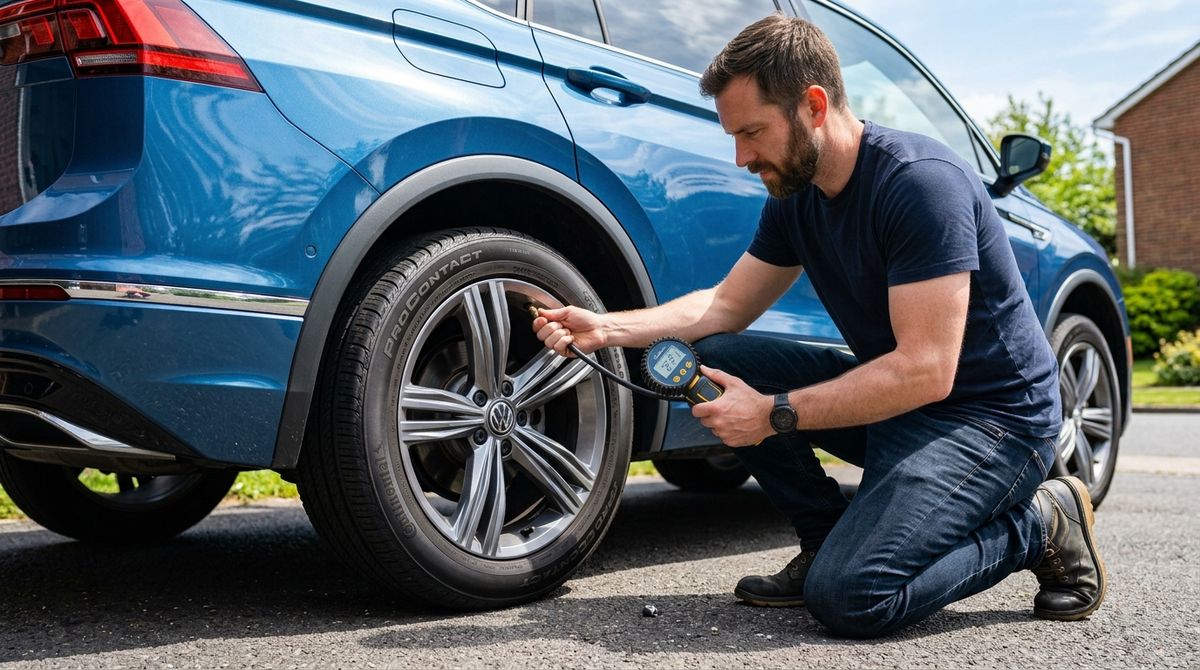
Buy a basic pressure gauge from a hardware shop or auto parts store. A pencil style gauge is easy to store in the glovebox, while a digital gauge can be easier to read in poor light. Check the recommended pressure on the sticker inside the driver’s door or in the owner manual, not on the tire sidewall, because the sidewall shows the maximum safe pressure rather than the figure you should use.
Check the tires when they are cold, ideally before you drive or after the car has been parked for several hours. Remove the valve cap, press the gauge firmly onto the valve, and read the number. Add air in short bursts if the pressure is low, and check again after each addition. Replace the valve cap afterwards, because it keeps dirt and moisture out of the valve. Do not forget the spare tire, if your car has one, since it can lose pressure too.
Reading tread depth with a coin
A quick way to check tread depth is the coin test. Place a coin with the head facing down into one of the main grooves of the tire. If you can see the top of the head of the coin, including the tip of the crown, the tread may be too worn and should be checked by a professional. If the tread covers that part of the coin, the depth is usually still acceptable for everyday driving. This test is simple and useful, though it is not as precise as a dedicated tread depth gauge.
Look for uneven wear as well. Bald patches on one side, a feathered edge, or small cracks in the rubber can point to alignment or suspension problems. Check all four tires, and compare the wear across each one. If you notice any bulges, cuts, or nails in the tread, stop driving on that tire until a qualified technician has looked at it.
Readers may also want to visit newsupdatesnow.com. Those guides often include photographs that make the signs of wear easier to recognize.
When to ask a professional
Some tire problems need a trained eye. If the pressure drops repeatedly, a slow puncture may be present, and a technician can usually find and repair it. If the tread is worn below the safe limit, the tire should be replaced rather than patched. Tire replacement is a decision for a qualified professional who can check the size, the load rating, and the speed rating, and who can explain the options clearly.
Keep a simple written record of your monthly checks. Note the date, the pressure readings, and any unusual wear. This record helps you spot a pattern, such as one tire that loses air faster than the others. Bring the record to the service visit so the technician has the full picture. A small notebook in the glovebox works very well for this purpose. You can also visit Crioceras.com for more reading.
Here is a short monthly checklist to keep in the glovebox:
- Check the pressure in all four tires and the spare, when cold.
- Look for uneven wear, bulges, cuts, or objects stuck in the tread.
- Use the coin test on at least two grooves in each tire.
- Write the readings and any concerns in your maintenance notebook.
- Book a professional inspection if anything seems unusual.
For a related read on this site, see How to Build a Mindful Routine for Following.
A simple habit taken seriously can protect you, your passengers, and everyone else on the road.